Intermittent Fasting
Intermittent Fasting Results Timeline: What to Expect Week by Week (2026)
The first week feels hard. The second week feels easier. By week four, fasting becomes automatic. Here is exactly what to expect along the way.
Written bySarah Lee· Nutrition & Weight Loss Writer
Medically reviewed byAndrew Kakan on
Quick Answer: When Will You See IF Results?
You will notice reduced bloating and improved energy within the first week. Measurable fat loss appears at weeks 2–4. Visible body composition changes — the kind other people notice — typically show between weeks 4–8, assuming you maintain a consistent calorie deficit.
This timeline is based on clinical trials and the biology of hunger hormone adaptation, glycogen depletion, fat oxidation, and body recomposition.
Days 1–3: The Adjustment Period
The first three days are the most challenging part of intermittent fasting. Your hunger hormones — particularly ghrelin — are still programmed to fire at your old meal times.
This hunger is real but temporary. Ghrelin peaks at your usual meal times regardless of whether you actually need food. Within 3–7 days, ghrelin patterns begin shifting to align with your new eating window.
Common experiences during days 1–3 include irritability, difficulty concentrating, headaches from dehydration, and strong food cravings. These are all normal and temporary.
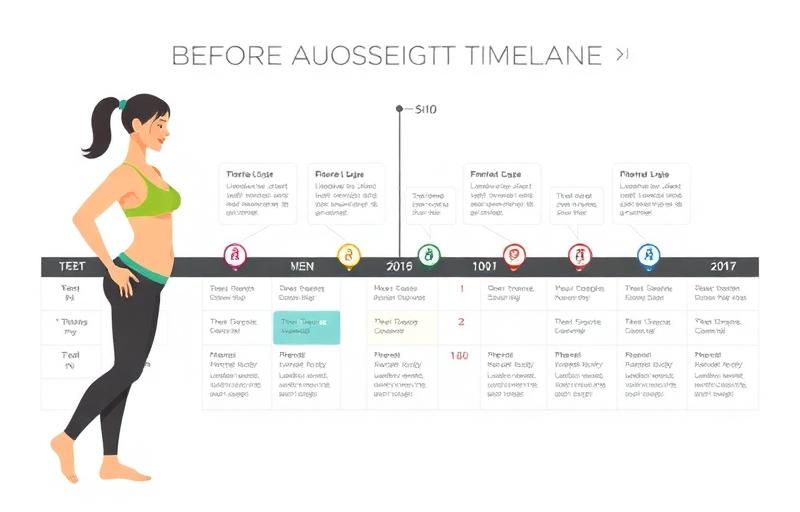
Days 4–7: Hunger Begins to Shift
By day four or five, most people notice a meaningful reduction in morning hunger. The ghrelin peaks at your old breakfast time become weaker. You may still think about food, but the physical urgency diminishes.
During this period, the scale drops 3–5 pounds. This is primarily water weight and glycogen depletion, not fat loss. Each gram of glycogen binds roughly 3 grams of water, so when glycogen stores deplete, water follows.
Energy levels often stabilize. Many people report improved mental clarity during fasting hours, likely due to the rise in norepinephrine and the absence of post-meal energy dips.
Week 2: The Turning Point
Week two is where intermittent fasting starts to feel like a real change rather than a struggle. Your hunger hormones have largely adapted. Morning fasting feels normal rather than forced.
Fat loss begins in earnest during week two but is subtle. At a 500-calorie daily deficit, you lose approximately one pound of fat per week — barely noticeable visually but significant over months.
This is when tracking methods beyond the scale become important. Take progress photos, measure your waist circumference, and note how your clothes fit. These metrics often show changes before the scale does.
Weeks 3–4: Fasting Becomes Automatic
By week three, most people report that fasting is simply their routine. They do not think about it, plan around it, or struggle with it. Hunger during fasting is minimal or absent.
Total weight loss by the end of week four typically ranges from 4–8 pounds, including the initial water weight. If you have maintained a 500-calorie deficit, roughly 2–3 pounds is actual fat loss.
You may notice your sleep improving. Eating your last meal 2–3 hours before bed improves sleep quality, which cascades into better hunger control, better food choices, and better energy.
Month 2: Visible Changes Begin
Month two is when other people start noticing. Your face may look leaner, your clothes fit differently, and you feel lighter. You have likely lost 6–12 pounds total, with 4–8 pounds being actual fat loss.
This is also when the first plateau often hits. Your body has adapted to the new calorie intake, and weight loss may slow for 1–2 weeks. Options for breaking through include a brief diet break, increasing protein, adding strength training, or slightly adjusting your fasting window.
Body composition changes become more apparent even if the scale stalls. If you are strength training alongside IF, you may be gaining muscle while losing fat — body recomposition shows dramatic visual changes with minimal scale movement.
Month 3 and Beyond: The Sustainable Phase
By month three, intermittent fasting is simply how you eat. There is no willpower involved. Your body, hunger hormones, and daily routine have all synchronized around your eating window.
At a steady rate of 1–1.5 pounds per week, you can expect 12–20 pounds of total fat loss over three months. Combined with strength training, your body composition will look dramatically different even if the scale has not dropped as much as expected.
What Can Slow Your Timeline
| Factor | Impact on Results | Solution |
|---|---|---|
| Inconsistent schedule | Delays hunger adaptation 1–2 weeks | Maintain consistent window 7 days/week |
| Inadequate protein | Muscle loss, metabolic slowdown | Aim for 0.7–1g per pound body weight |
| Poor sleep (under 7 hours) | Increased hunger, reduced fat oxidation | Prioritize sleep hygiene |
| No calorie deficit | Zero fat loss regardless of fasting | Track intake for 1 week to verify |
| Excessive fasted exercise | Elevated cortisol, water retention | Walk during fast, lift near eating window |
| High stress levels | Cortisol drives belly fat storage | Add 10 min daily stress management |
Accelerating Your Results
Once you have established a solid fasting routine and confirmed you are in a calorie deficit, evidence-based strategies to accelerate fat loss include:
- Increase protein to the upper range (1g per pound of body weight)
- Add 2–3 strength training sessions per week
- Walk 8,000–10,000 steps daily, especially during your fasting window
- Improve sleep quality — even 30 minutes more per night helps
- Consider natural metabolic support supplements for an additional edge
- Take periodic diet breaks (5–7 days at maintenance) every 8–12 weeks
Tracking Methods That Actually Work
The scale is the most commonly used tracking tool — and the most misleading. Daily weight fluctuations of 2–5 pounds are completely normal due to water retention, sodium intake, hormonal cycles, and digestive contents. Relying solely on daily scale readings leads to unnecessary frustration and premature protocol changes.
A better approach combines multiple metrics tracked weekly or biweekly. Weekly weigh-ins at the same time (ideally first thing in the morning after using the bathroom) provide trend data when averaged over 4+ weeks. Waist circumference measured at the navel is the most reliable single metric for fat loss, as it tracks visceral fat reduction independent of water weight.
Progress photos taken weekly in consistent lighting and angles reveal changes that the scale cannot capture. Side-by-side comparisons at 4-week intervals often show dramatic visual improvements even when the scale has barely moved. This is especially true for people combining IF with strength training, where body recomposition (simultaneous fat loss and muscle gain) produces striking visual changes at the same body weight.
The Psychological Timeline: Mindset Shifts Along the Way
Beyond the physical timeline, IF creates a predictable psychological journey. Week 1 brings doubt and discomfort. Weeks 2–3 bring cautious optimism as hunger fades. By week 4, confidence builds as the routine becomes automatic. Month 2 often brings the first compliments from others, reinforcing commitment.
Month 3 is a psychological turning point. Fasting is no longer something you do — it is simply how you eat. The identity shift from someone who is trying IF to someone who practices IF is subtle but powerful. Identity-based habits are far more durable than outcome-based habits because they do not depend on external results to sustain motivation.
Expect setbacks. Holidays, travel, illness, and life stress will disrupt your schedule. The psychological resilience that develops over 3+ months makes these disruptions temporary rather than terminal. Experienced fasters resume their routine within a day or two of disruption, whereas beginners often interpret a disruption as failure and quit entirely.
Managing Expectations: The Comparison Trap
Social media transformation posts create unrealistic expectations. Most dramatic before-and-after photos involve professional lighting, posing, dehydration, and months more time than advertised. Comparing your week-4 results to someone else's curated highlight reel is a recipe for discouragement and premature quitting.
Track your own progress photos and measurements — compare yourself only to your past self. A useful practice is to take a photo and measurements on day 1, then not review them until day 30. The contrast between day 1 and day 30 is always more dramatic than you expect, because gradual daily changes are invisible in real time.
Key Takeaways
- The first 3–5 days are the hardest — hunger adaptation is biological
- Initial weight loss of 3–5 pounds is mostly water — real fat loss starts in week 2
- By week 3–4, fasting becomes automatic for most people
- Visible changes typically appear in month 2
- Plateaus are normal and temporary — they do not mean IF has stopped working
- Body composition changes often matter more than scale weight
- Consistency over months matters infinitely more than perfection on any single day
Individual Variation: Why Your Timeline May Differ
While the weekly milestones above represent averages, individual variation is substantial. Starting body fat percentage heavily influences the timeline — someone starting at 35% body fat will see faster scale changes than someone starting at 22%, simply because there is more fat available for mobilization. However, the person starting leaner may see more dramatic visual changes per pound lost.
Hormonal factors create significant variation. Women's results fluctuate with their menstrual cycle — water retention during the luteal phase can mask 3-5 pounds of fat loss. Thyroid function, insulin sensitivity, and stress hormone levels all influence the speed and pattern of fat loss. Two people following identical protocols can have meaningfully different timelines.
Previous dieting history also matters. Someone who has never dieted before will typically respond faster than someone with a history of yo-yo dieting. Multiple rounds of severe calorie restriction can create accumulated metabolic adaptation that takes time to reverse. If you have a dieting history, adding 2-4 weeks to the standard timeline and starting with a very moderate deficit is advisable.
Frequently asked questions
- How soon will I see results from intermittent fasting?
- Most people notice reduced bloating and improved energy within the first week. Measurable fat loss typically becomes apparent at weeks 2–4. Visible body composition changes usually show by weeks 4–8.
- What happens after 1 week of intermittent fasting?
- After one week, your hunger hormones begin adapting. Morning hunger diminishes significantly. You may notice reduced bloating, slightly improved mental clarity, and better energy stability.
- How much weight can you lose in a month with IF?
- A realistic expectation is 4–8 pounds in the first month, assuming a 500-calorie daily deficit. The first week shows 3–5 pounds of mostly water weight. Fat loss averages 1–2 pounds per week after that.
- Why am I not losing weight after 2 weeks of IF?
- The most common reason is eating at maintenance calories during your feeding window. Track your food for one week to verify a deficit. Water retention from exercise or hormonal cycles can also mask fat loss on the scale.
- Does intermittent fasting get easier over time?
- Yes, significantly. Hunger hormone adaptation occurs within 5–10 days. By week 3–4, most people report that fasting feels natural and they have to remind themselves to eat when their window opens.